Thursday, February 16, 2017

Sunday, February 12, 2017
Representation in Disney films
Last year, the producers of the movie Doctor Strange, which was distributed by Walt Disney Studios Motion Pictures, decided to a replace the Tibetan male character “The Ancient One”, as portrayed in the original comic, with a Celtic female version of it. When Tilda Swinton was cast as The Ancient One, this controversial decision generated a wave of negative backlash against what was evidently “whitewashing”.

In response to this, director Scott Derrickson explained that adapting the original character as the comics portrayed him would be perpetuating the Asian Fu Manchu stereotype as well as drag the film into the controversial Tibetan sovereignty debate. Derrickson wanted to change the character to an Asian woman, but felt that an older Asian woman would invoke the Dragon Lady stereotype, while a younger Asian woman would be perceived as exploiting Asian fetish and "a fanboy's dream girl". He acknowledged the whitewashing and stereotyping of asians in film, saying that "Asians have been whitewashed and stereotyped in American cinema for over a century and people should be mad or nothing will change.”
However, he also took the opportunity to emphasize the “diversity” of the film's cast, in terms of both gender and ethnicity. Perhaps what I found most alarming was his comment, “What I did was the lesser of two evils, but it is still an evil."
It’s no secret that Disney has long sought to “diversify” its image, like Aladdin, Pocahontas, and most recently Moana and Zootopia. Most recently, Disney publicly promised that the upcoming live-action Aladdin remake will not feature “a white guy”. The Star Wars film Rogue One features a diverse cast, including stars including Donnie Yen, Riz Ahmed, and Diego Luna. However, it seems to me that Disney is now choosing which aspect of a person’s intersectional identity takes precedence over another.
Tilda Swinton is clearly no exception too. I read this article in which the columnist argues that Tilda Swinton "used feminism to downplay concerns about race". I think that Swinton’s reframing the discussion around gender ignores the salient issue of the underrepresentation of actors/actresses of asian descent.
After Swinton was cast, Derrickson felt obligated to find a way to include asian-american Benedict Wong in the film. But frankly, I feel that the director went to such great lengths to address potential controversies and scrutiny regarding The Ancient One, yet in the process created even more controversy. How ironic.

In my opinion, Disney’s efforts to remain apolitical, inclusive and diverse are backfiring. Perhaps Disney should just stop trying to “control” nature and perfect their image, and Disney would be much more well-received.
Thursday, February 9, 2017
Saturday, February 4, 2017
Inside Out and Mental Illness
I watched Inside Out after a friend of mine had told me that it was a movie about a “screwed up” mind. But what I took away from the movie was Disney’s addressing on mental illness.
But what struck me was that Sadness didn’t seem to be intentionally making Riley sad. She actually didn’t seem to want Riley to be sad. She is remorseful and profusely apologizes, explaining that explaining that she doesn’t know why she’s doing it and that she doesn’t mean to mess things up.
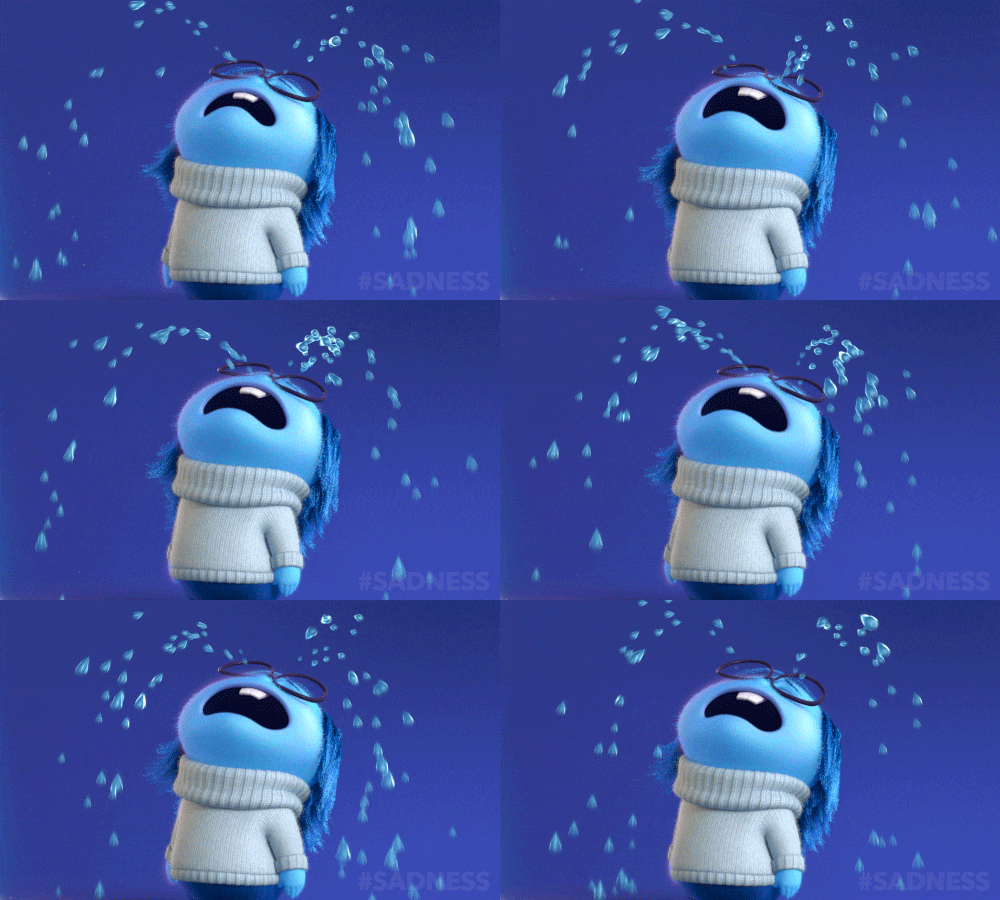 I soon realized that Disney was trying to address an important issue in today’s dog-eat-dog world; the issue of mental illness, especially amongst teens. It was trying to emphasize the importance of feeling and embracing sadness: when we keep denying ourselves the right to be vulnerable and sad, our feelings instead bottle up, causing us to further escalate into a spiral of depression. Our pursuit of happiness should not necessitate fighting and pushing away our negative emotions.
To me, the portrayal of Joy and Sadness working together to get back to headquarters reminded me that our highs and lows, our strengths and weakness are packaged deals. As Joy finally gave the control to Sadness, when we finally acknowledge that sadness is an inherent and natural component of our feelings, we are more able to rationalize our thoughts and actions. When we embrace sadness, we come to realize that after the rain, comes a beautiful rainbow.
 Inside Out was a reassuring move on Disney’s part to address issues not just pertinent to teenagers but also to adults alike. Many of us live with unhealthy “screwed up” minds, but do not allow ourselves to embrace vulnerability.
However, I do wish that Disney could have better depicted Riley being in control of her own mind, rather than the emotions literally controlling her mind. To some extent, it does seem to give off the message that the power of our emotions on our actions and behaviour are insurmountable.
Wednesday, February 1, 2017
Subscribe to:
Posts (Atom)